
Home / Motorcycle Key Programming
Motorcycle Key Programming
Motorcycle Key Programming Werribee
We pair immobiliser and transponder keys to your bike’s ECU on site, then start the engine before we leave.
- Immobiliser & transponder coding
- Honda, Yamaha, Kawasaki, Suzuki, KTM, BMW & more
- Tested and started before we leave
Get It Programmed
Tell us the make, model and year so we bring the right coding gear.
Immobiliser and transponder keys, coded at the bike
Motorcycle key programming at your bike
If your bike was built in the last couple of decades and is anything bigger than a commuter, there’s a good chance it runs an immobiliser. A key that turns the barrel is only half the job. Until the chip inside is recognised by the bike’s computer, the engine won’t fire.
Ostan Locksmiths pairs transponder and immobiliser keys on site across the major systems: Honda’s HISS, Yamaha’s immobiliser (which relies on a red master key to register new ones), Kawasaki’s KISS and KIPASS, Suzuki’s SAIS, and the ECU-based systems on KTM and BMW. Ducati and other European makes that keep the immobiliser in the instrument panel rather than the ECU are also within scope.
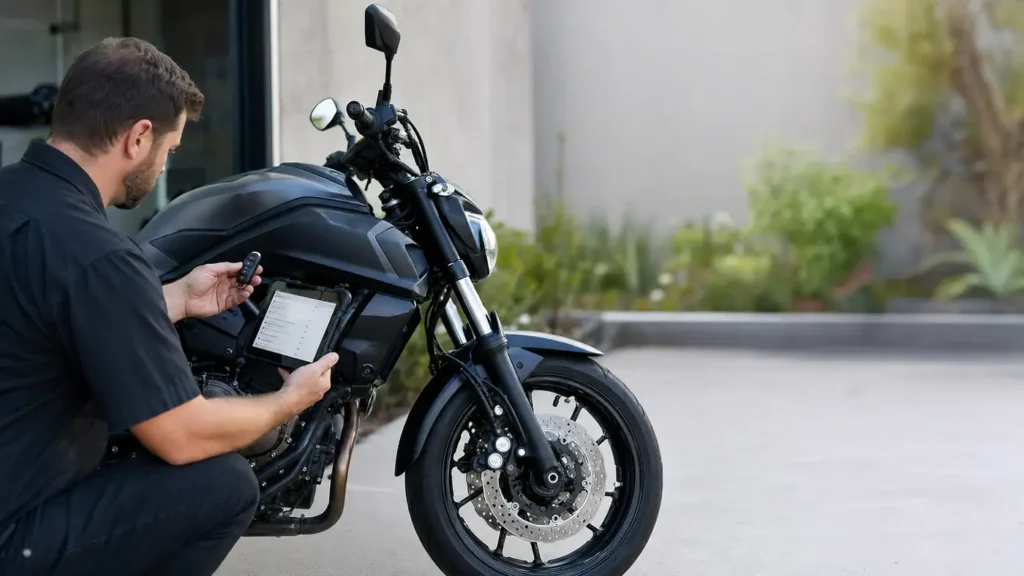
What motorcycle key programming actually covers
Anything with a transponder chip inside has to be written into the exact list of keys your bike’s ECU or immobiliser unit accepts:
- Transponder keys paired to the immobiliser or ECU
- Adding a spare while a working key still exists
- All-keys-lost programming, rebuilt from scratch
- Red master key systems on Yamaha and Kawasaki
- Scooter immobiliser keys, including Vespa and Piaggio
- Key fob and remote functions where fitted
- Immobiliser fault diagnosis at the bike
- Engine start and warning light tested before we leave
Does your bike actually have an immobiliser?
Give us the make, model and year. We’ll tell you over the phone whether it needs coding, which system it runs, and what that job involves.
How it works
Bike not recognising your key? Here's how we get it programmed
01
Tell us the make and model
Give us the make, model and year plus whether you've got a working key already. That tells us which coding system and equipment to bring to the bike.
02
Check the dash and the system
A flashing key or padlock light tells us the immobiliser isn't seeing an accepted key. We confirm whether it's ECU based or split, then plan the coding sequence from there.
03
Connect and write the new key
We link to the ECU or immobiliser unit, or work through the ignition ring where the system needs it, then write your new transponder key into the accepted list.
04
Start it and test every lock
We start the engine, confirm the warning light clears, and run the key through ignition, seat and fuel cap before we leave. No half-working key gets left with you.
Call now and we'll talk you through pricing and timing for your bike key programming.
Ready to get started?
0410 380 354
Mobile service across Werribee and the Wyndham suburbs, 24 hours a day
Need your immobiliser keys coded?
0410 380 354
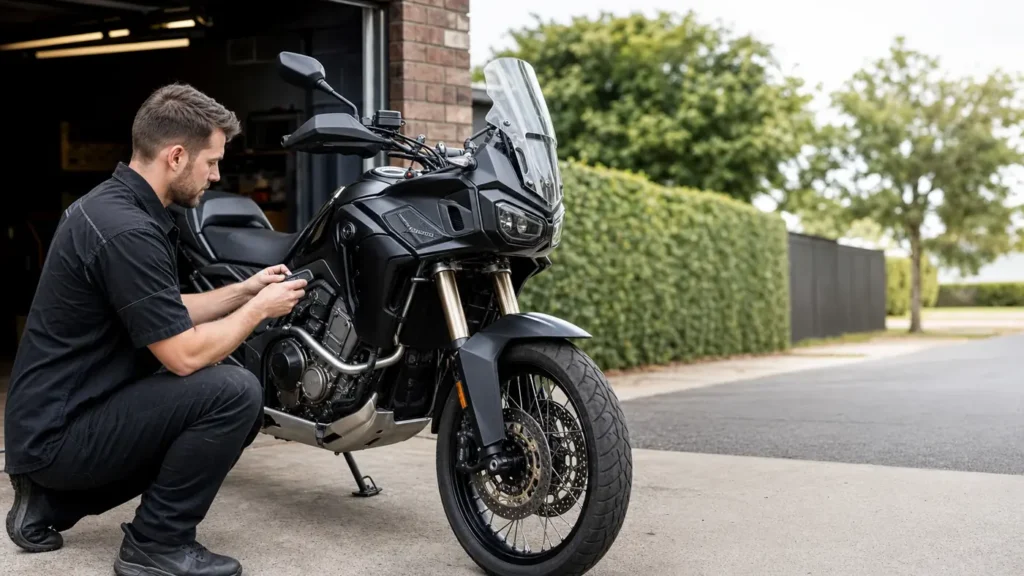
Programming with a working key, versus none at all
You still have one working key. That’s the straightforward case. Most systems, including Honda’s HISS and Suzuki’s SAIS, allow a new key to be added while an accepted key is present, and the job is usually finished in under an hour.
You have no working key. The bike has to be brought back to a state where it will accept keys from scratch. On Yamaha models that use a red master key, losing that key specifically is what turns a routine job into a longer one, since the master is what lets the system learn a new key at all. Kawasaki’s KIPASS-equipped bikes, where the key never leaves a proximity fob, need a different approach again. It takes longer either way, but Ostan Locksmiths does it at your bike rather than on a trailer to a dealership.
See lost motorcycle keys for that situation.
Still Got A Key?
Add A Spare Before You Need One
Programming a second key while your bike still accepts one is quicker and cheaper than starting from nothing later, especially on Yamaha models that rely on a red master key.
Program a spare while the bike's still accessible
The gap between adding a second key today and creating one from nothing later isn’t small. It’s often the difference between a routine appointment and a job that ties up your bike for an afternoon, or in the case of a lost Yamaha red master key, a genuinely difficult one.
Riders who bought their bike second-hand should assume there’s no spare unless they’ve physically seen it. A single key is the normal state of a used bike, and it stays fine right up until it isn’t.
Related: motorcycle key cutting, ignition repair, and the full motorcycle locksmith service.
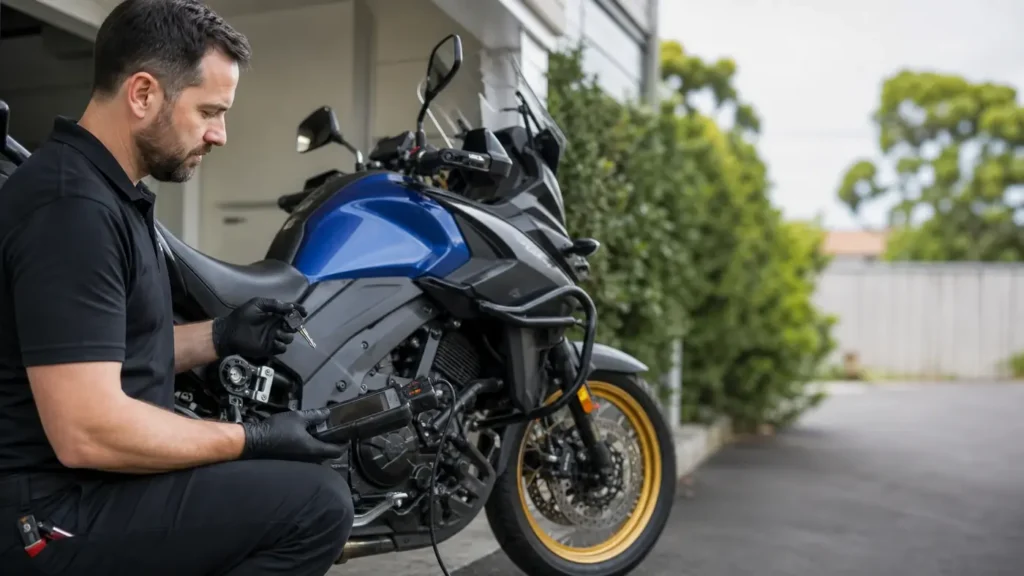
Ostan Locksmiths service area
We come to cars, utes, vans and motorcycles across Werribee, the Wyndham suburbs and Melbourne’s inner west, including:
Questions we get asked
Frequently Asked Questions
Look for a key or padlock symbol on the dash when you switch on. If it flashes and stays flashing rather than going out, the immobiliser isn’t seeing an accepted key. Most bikes larger than a commuter, built in the last twenty years or so, have one.
Yes, though it takes longer than adding a spare. The bike has to be returned to a state where it accepts new keys, and on some makes, Yamaha’s red master key system especially, that means working directly with the ECU or immobiliser unit rather than the key itself.
We come to you. Programming happens at the bike anywhere across Werribee, Tarneit, Hoppers Crossing, Point Cook and the rest of Wyndham, which saves trailering a machine that won’t start in the first place, and it usually happens in the one visit.
Often, yes. The risk with cheap online blanks is that the transponder chip inside may not be the correct type for your bike’s system, Honda HISS, Kawasaki KISS or otherwise, in which case it won’t pair no matter what equipment we bring.
On several brands, Yamaha in particular, one key in the set is a coded master that controls how the immobiliser learns new keys. Lose that one and adding a replacement gets a lot harder, so it’s worth knowing whether your bike uses one before you’re down to your last key.
Not usually. Most bike immobiliser systems aren’t written through an OBD-style port the way modern cars are. Programming is done through the key system directly, or by working with the ECU or immobiliser ring at the bike itself, depending on the manufacturer.
Some do, particularly larger and newer models, including several Vespa and Piaggio ranges. Plenty of smaller scooters still run a simple mechanical key with no chip at all. We check the dash and the key itself before quoting either way.
Book Programming
Get Your Immobiliser Keys Coded
Call with the make, model and year and whether you have a working key, and we’ll bring the right programming gear.